
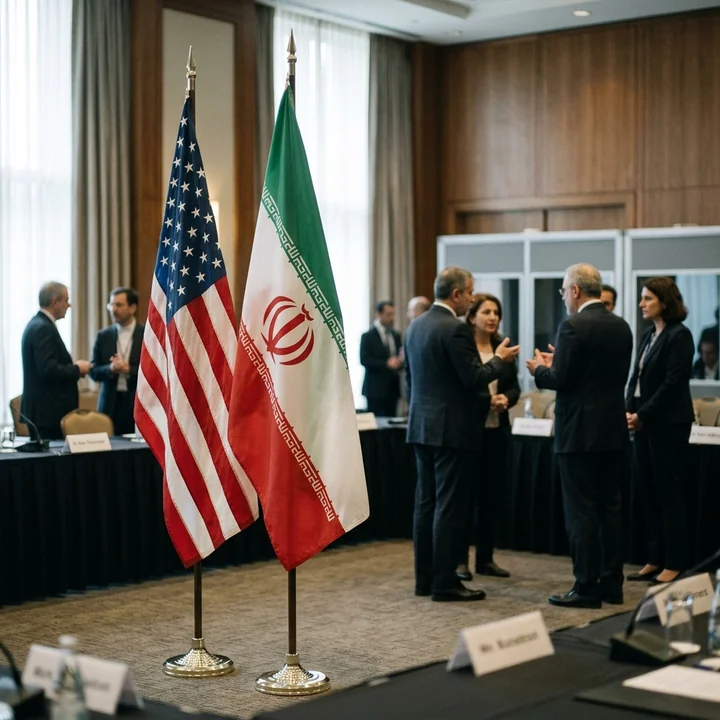
Asian stock markets rallied strongly following news of a peace agreement reached between the United States and Iran. Global crude oil prices tumbled immediately after U.S. President Donald Trump announced that the two nations had finalized an agreement to reopen the strategic Strait of Hormuz.
Investors in the Asian region reacted to the geopolitical breakthrough with great enthusiasm. South Korea’s Kospi index surged 5.1%, leading the region’s gains. In Japan, the Nikkei 225 index climbed 3.6%, while the broader Topix index gained 2.6%.
According to reports, U.S. crude oil futures for July delivery dropped 4.77% to $80.83 per barrel. Meanwhile, Brent crude futures, the international benchmark for August delivery, fell by approximately 4% to trade around $83.77 per barrel.
“The deal with the Islamic Republic of Iran is now complete,” Trump posted on Truth Social. He added that the Strait of Hormuz would be opened without any toll system, and the United States would lift its naval blockade against Iran. “Ships of the world, start your engines. Let the oil flow!” he wrote.
Trump further noted that the strait would open on Friday, the same day the official signing ceremony is scheduled to take place in Switzerland. “With the Strait of Hormuz opening after the signing of the Agreement on Friday, for mine-sweeping purposes, oil will flow back on both ends for the region, and the world!” he stated.
The Strait of Hormuz is a crucial maritime transit point, with approximately 20% of the world’s oil supply passing through it. Tanker traffic had plummeted in early March following Iranian attacks, triggering the largest oil supply disruption in history.
Pakistan Prime Minister Shehbaz Sharif, who acted as a mediator, confirmed that both the United States and Iran announced an immediate and permanent cessation of military operations across all fronts, including Lebanon. “We want to thank the United States and the Islamic Republic of Iran for their commitment to finding a diplomatic solution to this conflict,” Sharif said.
Mediators are scheduled to facilitate meetings this week to lay the groundwork for technical discussions and the official signing ceremony.
Lars Barstad, CEO of Frontline, a prominent oil tanker company, expressed optimism about the swift recovery of traffic in the Strait of Hormuz. “I am actually very optimistic that once the situation improves and the U.S. and Iran reach a credible agreement—at least to not attack vessels—traffic will resume very quickly,” Barstad told CNBC.