
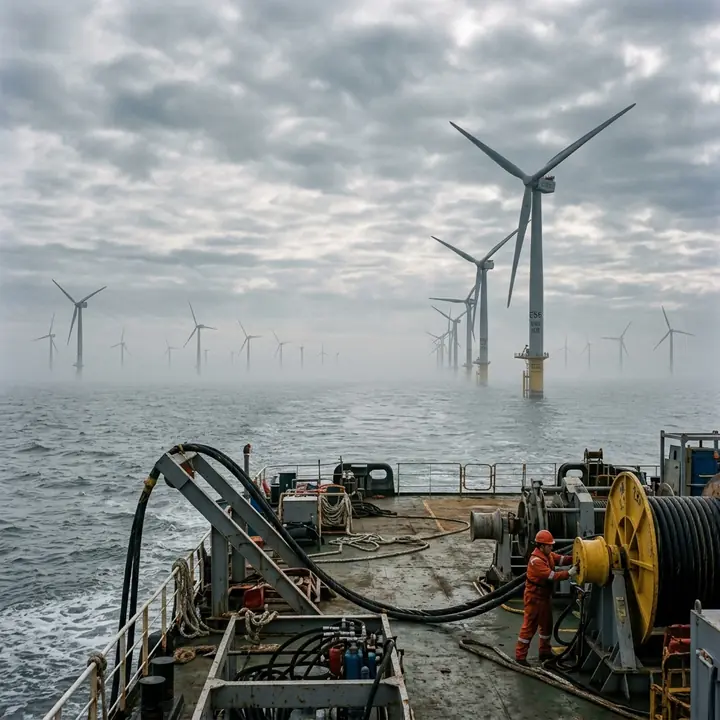
China has officially launched the world’s first underwater, wind-powered data center off the coast of Shanghai. The Shanghai Lingang data center project is a joint venture between HiCloud Technology and the state-owned China Communications Construction Company, representing a 1.6 billion yuan investment. The green infrastructure facility, which has a capacity of 24 megawatts (MW), marks a major milestone in China’s commitment to boost clean energy supply for AI infrastructure by 2030.
Located more than 10 kilometers offshore and submerged 10 meters below sea level, the facility reduces power consumption by over 20% compared to traditional land-based data centers. The power reduction is achieved by using sea water as a natural coolant. Conventional data centers typically consume 25% to 40% of their total power to run cooling systems to prevent server overheating.
Submerging servers also reduces fresh water consumption. Traditional data centers, which form the backbone of artificial intelligence, require massive amounts of water for cooling. A report from the United Nations University’s Institute for Water, Environment and Health estimates that the global water footprint of data centers could reach 9.3 trillion liters by 2030, equivalent to the annual domestic water needs of 1.3 billion people in sub-Saharan Africa.
Unlike HiCloud’s first underwater project in Hainan in 2023, the Lingang facility is fully powered by offshore wind energy. While Microsoft piloted a similar project in Scotland’s Orkney Islands in 2018, that project has since stalled. Experts note that China has managed to transition this concept into commercial deployment by quickly aligning market demand, engineering capabilities, and policy support. Although underwater data centers present potential risks such as marine sediment disruption and localized water temperature increases, scientists believe these impacts are manageable.